We take the system problems
The ones that don't get easier when you add engineers, where correctness, performance or physics rules out the obvious approach.
Hopline is a product and engineering studio for deep tech and specialised systems. We take the work end to end, from defining the problem to code your team runs without us.
Some problems don't get easier when you add engineers. If correctness, performance or physics has already ruled out the obvious approach, a bigger team just arrives at the same wall faster. Those are the problems we take.
What we bring to them is compilers, optimisation and infrastructure: physics compilers, GPU and HPC workloads, verified microkernels, and control systems where being wrong has consequences. Between the two founders that is 12+ years, across CERN-HSF, LBNL, Høgskolen i Molde, Appwrite and Homebase. We are an seL4 tech partner.
And we go the whole way. Not a report, not a prototype, not a team you have to keep paying to understand its own output. The engagement ends with reproducible builds, documentation and a repo your team runs without us.
We don't have a wall of slogans. Just a few principles that quietly shape every decision, every commit, and every handoff.
The ones that don't get easier when you add engineers, where correctness, performance or physics rules out the obvious approach.
Tests, benchmarks and proofs, whatever the work calls for. You can rerun any of it yourself and get the same answer.
From defining the problem to code your team runs without us. Reproducible builds, documentation your team can act on, and no standing dependency on Hopline.
Both founders stay across the work from scoping to handover. Any specialist we bring in gets named to you before they start.
We won't quote a build for a problem nobody has written down yet. Scope first, in writing, then you decide whether the build is worth doing and who does it.
Short and fixed. We define the problem in writing and produce a plan. If you take that plan elsewhere, it still works.
Milestones that each produce a working artifact, verified with tests, benchmarks or proofs, ending in a clean handover.
On-prem deployments, pipelines and models kept running after handover, in environments where there is no vendor console to log into.
Not renegotiated at handover, and not left to a clause nobody reads until there's a disagreement.
Client owns all deliverables and their rights
Pre-existing and general-purpose tooling remains ours
Naming and publication agreed before work starts
Both of us stay across an engagement from scoping to handover. Where a problem needs a domain specialist in verification, hardware or quantum control, we bring one in and tell you their name before they start.

Building developer infrastructure across Appwrite and Homebase. Multi-language code generation and SDK tooling, agentic systems, and privacy-first, self-sovereign architecture. 6+ years.
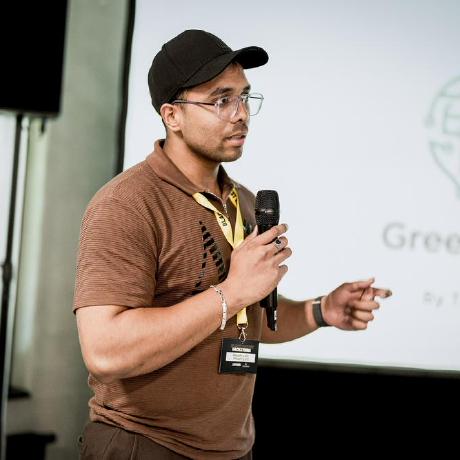
R&D across Høgskolen i Molde, CERN-HSF and LBNL. Compilers and optimised backends, low-latency inference, and brain-computer interfaces. 6+ years.
Start with a scoping call. If it's the kind of work we take, the next step is short, fixed, and ends in a problem statement you could hand to anyone.